


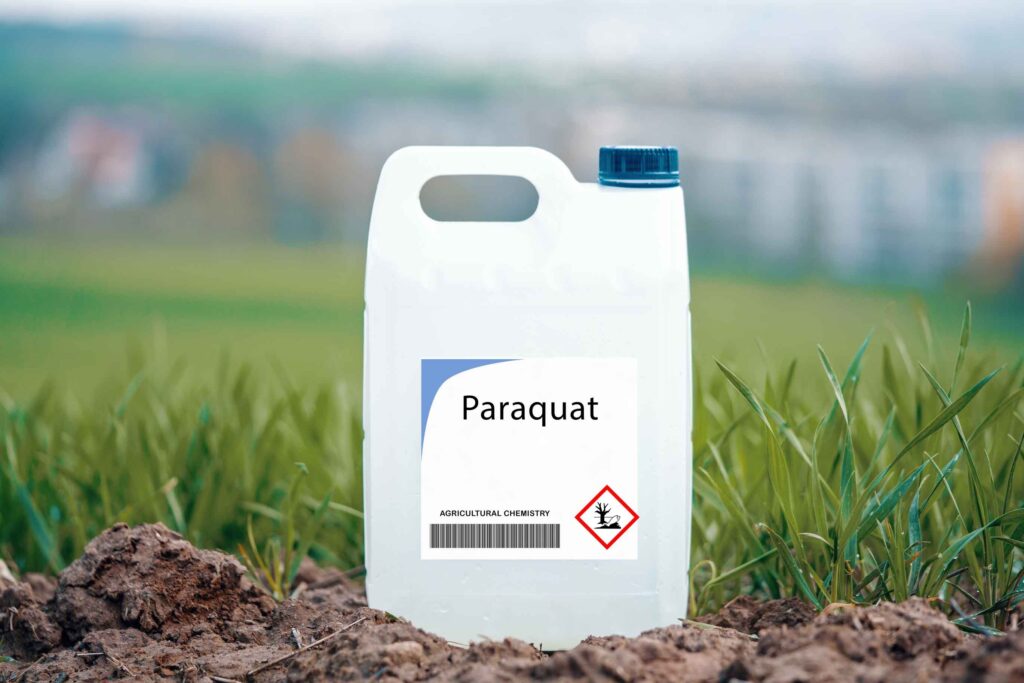
Everyday, Americans are exposed to a number of manmade substances that we trust won’t cause serious harm. Potentially harmful chemicals are in products we use, cleaning supplies, even coating our food. However, sometimes the agencies tasked with ensuring public safety fail to adequately protect us, and harmful products are allowed on the market. One prominent example is the pesticide Paraquat, which has raised significant safety concerns due to its potential health risks.
If you or someone you love has been diagnosed with Parkinson’s disease or another serious illness after exposure to the herbicide Paraquat, you are not alone. Thousands of individuals across the country are pursuing paraquat lawsuits, claiming the manufacturers failed to warn users about the serious health risks.
At Aubrey Givens & Associates, PLLC, we are dedicated to helping people who have suffered due to corporate negligence and dangerous products. Our team is prepared to break down what you need to know about Paraquat, who’s most at risk, and what steps to take if you’ve been exposed.
To speak with one of our trusted attorneys, call (615) 248-8600 or contact us today for a free consultation.
What Is Paraquat and Why Is It Dangerous?
Paraquat is a fast-acting herbicide used to kill weeds and grasses in agricultural settings. Known by brand names like Gramoxone, it has been in use for decades and remains legal in the United States under strict regulation. It is especially popular for its efficiency, often used in soybean, corn, cotton, and orchard crops.
Paraquat is classified as a Restricted Use Pesticide (RUP) by the Environmental Protection Agency (EPA), meaning only certified applicators with special training can legally use it. Yet, serious questions remain about whether current regulations are enough to protect users and those living near agricultural zones.
In recent years, multiple studies have linked Paraquat exposure to neurodegenerative diseases, particularly Parkinson’s disease. These studies, combined with an increasing number of lawsuits and injury reports, have brought renewed scrutiny to its use and safety.
Why Exposure Risks Are Higher for Farmers and Agricultural Workers
Farmers, pesticide applicators, and agricultural workers face some of the highest risks of exposure to Paraquat due to their direct and frequent contact with this toxic herbicide. Tasks such as mixing concentrated Paraquat, spraying crops, cleaning equipment, and working in recently treated fields put them at risk of exposure through skin contact, inhalation of spray mist, or accidental ingestion.
Even with protective equipment, repeated or prolonged exposure can lead to the absorption of harmful amounts of Paraquat through the skin or lungs. Research shows that Paraquat particles can penetrate mucous membranes in the respiratory tract, and skin damage or breaks increase absorption risk. Protective measures can reduce but not eliminate these dangers, making occupational exposure a significant health concern.
Health Risks Linked to Paraquat Exposure
Mounting evidence connects long-term or repeated exposure to Paraquat with several serious health conditions. Some of these effects may not become evident for years, making it harder for victims to realize the source of their illness.
Parkinson’s Disease and Paraquat Lawsuits
The most prominent health issue associated with Paraquat exposure is Parkinson’s disease, a progressive neurological disorder that affects movement, muscle control, and balance. Several scientific studies, including research from the National Institutes of Health (NIH), have found that people exposed to Paraquat are more likely to develop Parkinson’s.
This connection has led to a wave of paraquat lawsuits, claiming manufacturers failed to warn the public about the risks. Lawsuits are being filed across the U.S., and the legal landscape continues to evolve with new updates and potential settlements on the horizon.
Cancer Risks Connected to Paraquat
While the strongest scientific link is with Parkinson’s, some claimants have also connected Paraquat exposure to various types of cancer, especially lung and esophageal cancers.
Ongoing litigation and research are exploring whether long-term exposure increases the likelihood of these diseases, particularly for those in high-risk occupations.
Other Potential Health Effects from Paraquat Poisoning
In addition to Parkinson’s and cancer, Paraquat exposure has been linked to:
- Respiratory failure
- Liver and kidney damage
- Lung scarring
- Chemical burns
- Gastrointestinal complications
Acute exposure can result in immediate poisoning, especially if ingested or inhaled in concentrated form.
Long-Term Exposure vs. Accidental Exposure
While a one-time spill can be dangerous, long-term, low-level exposure is often harder to detect and more insidious. Some individuals developed illnesses decades after consistent seasonal exposure. If you worked in agriculture for years and are now facing a Parkinson’s diagnosis, your exposure history could be a key piece of your legal case.
Who May Be at Risk for Paraquat Exposure?
Paraquat exposure primarily impacts individuals involved in its production, handling, and application, as well as those living near treated areas. Understanding these risk groups helps focus health and legal attention where it’s most needed.
Farmers, Agricultural Workers, and Pesticide Applicators
Individuals working in agriculture are at the highest risk of Paraquat exposure, especially those who have regularly handled or applied herbicides from the 1970s through the 2000s. Activities such as mixing Paraquat concentrate, loading it into spraying equipment, and applying it to crops create multiple pathways for exposure.
Despite the use of personal protective equipment (PPE), repeated contact with Paraquat can lead to absorption through the skin or inhalation of airborne particles. Protective clothing, gloves, and respirators are essential but do not entirely eliminate exposure risks, especially during long work shifts in hot or humid conditions.
Communities Living Near Farmland or Contaminated Areas
Beyond agricultural workers, nearby residents are also vulnerable to Paraquat exposure primarily through pesticide drift and environmental contamination. Spray drift is the movement of pesticide droplets by wind during or after application that can carry Paraquat onto neighboring properties, exposing rural residents, children, and families who never directly handled the chemical.
Groundwater contamination from Paraquat runoff can even affect community water supplies, increasing chronic exposure risks. These indirect exposure pathways have raised health concerns and legal claims, as affected populations may suffer adverse effects without having been involved in the pesticide’s use.
What to Do If You Believe You’ve Been Exposed
If you think you were exposed to Paraquat, especially if you’re experiencing neurological symptoms, take the following steps:
- Seek a full medical evaluation, preferably from a neurologist if you show signs of tremors, slowed movement, or stiffness.
- Gather any documentation you have of past employment, pesticide use, or workplace safety training.
- Avoid discussing your case with insurance companies or product manufacturers.
- Contact an experienced paraquat exposure attorney at Aubrey Givens & Associates, PLLC who understands these complex cases.
Even if your exposure occurred many years ago, you may still be eligible to file a claim. In Tennessee, the statute of limitations for filing a Paraquat-related product liability lawsuit is typically four years from the date of diagnosis of Parkinson’s disease or a related neurodegenerative illness.
Additionally, claims may be barred if more than six years have passed since the disease developed or ten years from the purchase of the product, whichever is earlier. This means it is critical to consult with a Tennessee Paraquat lawyer as soon as possible to protect your rights and begin building your case.
Current Paraquat Lawsuits and Legal Options
Thousands of lawsuits are currently underway across the country as part of multi-district litigation (MDL), which streamlines similar claims into one federal court. These cases allege that manufacturers of Paraquat, including Syngenta and Chevron, failed to warn users about the risks of long-term exposure and the potential for Parkinson’s disease.
Compensation That May Be Available to Victims
If your illness is linked to Paraquat exposure, you may be entitled to compensation for:
- Medical expenses and ongoing treatment
- Lost income or reduced ability to work
- Pain and suffering
- Emotional distress
- Loss of quality of life
- Punitive damages (in cases of gross negligence)
If a loved one passed away from complications related to Paraquat, your family may also be eligible for a wrongful death claim.
Each case is unique, so it's important to consult a knowledgeable personal injury lawyer with experience in paraquat mass tort litigation.
How Aubrey Givens & Associates Can Help
Aubrey Givens & Associates, PLLC has a long history of standing up for individuals harmed by negligence and dangerous products. When corporations put profits before people, we hold them accountable.
Protecting Your Health and Rights After Paraquat Exposure
Our legal team understands the medical, financial, and emotional toll these cases take on families. At Aubrey Givens & Associates, PLLC, we offer:
- Free consultations with no obligation
- Help obtaining medical evaluations and expert opinions
- Clear, honest communication every step of the way
- No fees unless we win your case
Our dedicated Paraquat mass tort attorneys are currently reviewing paraquat exposure claims for individuals who have been affected. If you or a loved one has been diagnosed with Parkinson’s or another illness after Paraquat exposure, we encourage you to reach out.
You don’t have to face this alone. Let your voice be heard. Call (615) 248-8600 or contact us now to learn your rights and explore your legal options.